Nine Tests Authenticated MCP Access to AFR and SMH Journalism
Nine is piloting an authenticated Model Context Protocol connection that lets licensed corporate subscribers query journalism inside their own AI tools. Pricing and the wider 2027 rollout remain unresolved.
TrendzNow Audio Narration
Watch the 60-Second Video Summary
Concise spoken briefing with synchronized captions and visual highlights on our official YouTube channel.
Across Artificial Intelligence, fresh developments around Nine Tests Authenticated MCP Access to AFR and SMH Journalism are drawing close industry attention.
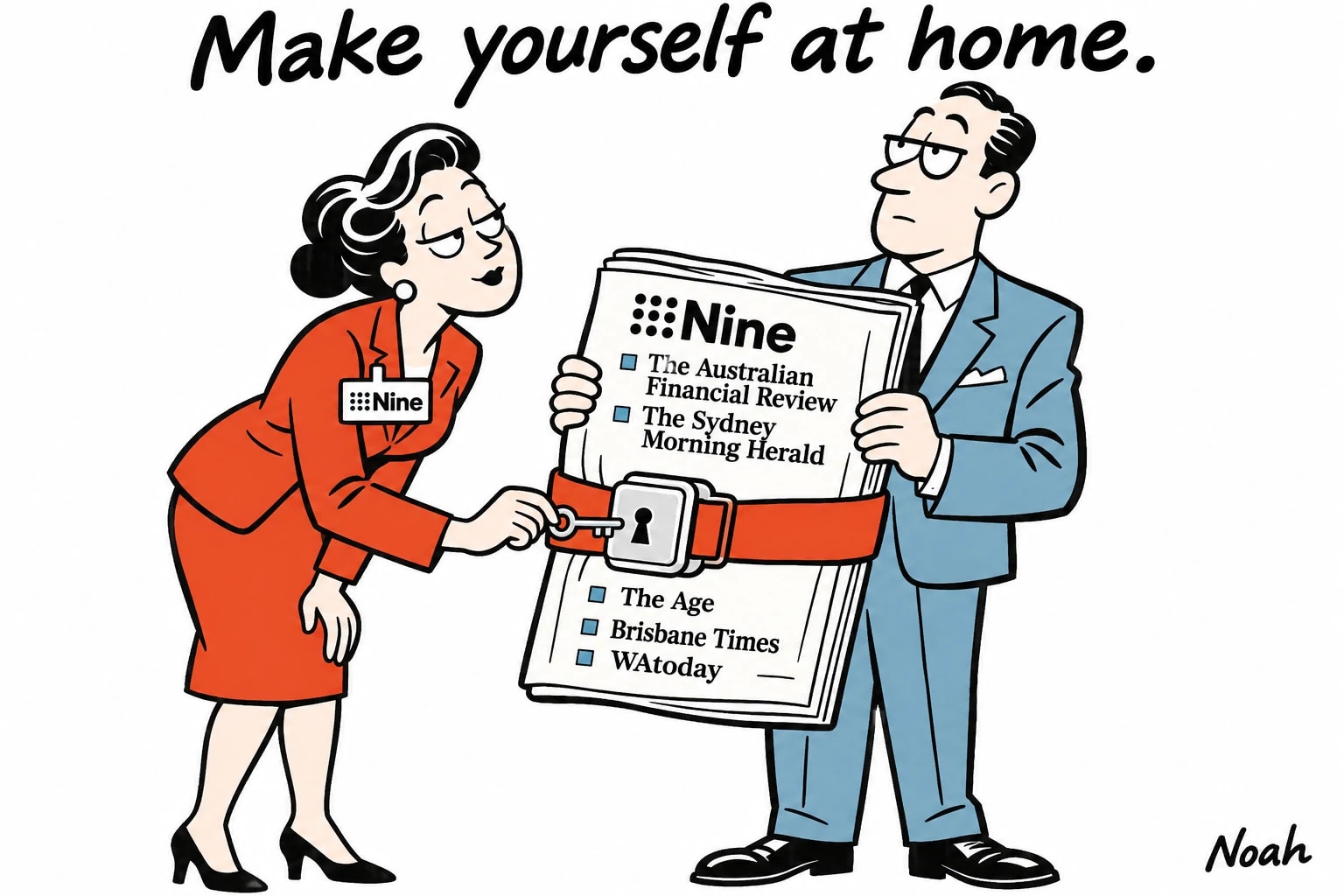
Nine is testing a way for business customers to use its journalism from inside their own AI tools, rather than having to open a newspaper website first. The authenticated Model Context Protocol pilot covers reporting from The Australian Financial Review, The Sydney Morning Herald and three other Nine titles, giving licensed corporate subscribers a standardised route to query content in enterprise workflows.
The trial matters because it puts the publisher’s existing subscription relationship inside the AI systems companies already use. But Nine has not announced pricing for the new access, and the pilot is not yet a general public product. A wider rollout is planned through 2027.
What Nine’s MCP pilot lets corporate subscribers do
The pilot connects licensed businesses to journalism from The Australian Financial Review (AFR), The Sydney Morning Herald (SMH), The Age, Brisbane Times and WAtoday. A subscriber can test querying that reporting from within the company’s own AI tools. Nine can authenticate the business even when an employee is using an AI tool rather than visiting a Nine news site.
That distinction is central to the test. Access is tied to a corporate subscriber’s licence, not simply to an individual employee’s browser session. Nine is therefore testing how its journalism can be made available in a different working environment while retaining a way to recognise the paying business.
The pilot builds on Nine’s existing software interfaces for enterprise customers, according to reporting from Tomorrow’s Publisher and IT Brief Australia. The new connection adds MCP, an open standard intended to let compatible AI systems request information from external data sources through a common interface. The pilot is for licensed business-to-business customers, not an announcement that all readers can freely feed Nine articles into any chatbot.
How authentication and MCP fit together—and what remains unknown
MCP supplies a standardised connection between an AI tool and an outside source. In this case, Nine’s pilot uses authentication so a corporate customer can connect its licence to the AI workflow. IT Brief describes the layer as intended to make integration more secure and reduce friction for enterprise clients already using Nine APIs. The available reporting does not detail the underlying technical implementation, the exact data returned to AI systems, or the controls governing storage and reuse.
That leaves important commercial and operational questions open. Nine has yet to say what it will charge for the pilot or any broader MCP access. The sources also do not specify which AI products are compatible, how usage will be measured, or whether subscribers will face limits on queries. Those details will shape whether this is a convenient extension of an existing licence or a distinct paid product.
Nine’s stated direction is a wider rollout through 2027, but a timetable beyond that broad target has not been supplied. For now, companies can treat the announcement as a pilot they may be able to test if they are eligible corporate subscribers—not as a universally available integration.
Why this matters to publishers and enterprise AI users
Nine joins publishers and data providers offering licensed content through MCP, with Politico, LSEG and FactSet cited as examples in iTnews. The comparison points to a broader commercial approach: rather than relying only on people to visit a website, content owners can test ways to serve information inside business software and AI workflows.
For corporate users, the practical promise is easier access to reporting in the tools where employees work. For publishers, authentication offers a way to distinguish a licensed business from an unauthorised user, even when the content is reached indirectly through an AI assistant. That does not, by itself, establish how answers will cite sources, what article text the system can retrieve, or how rights will be enforced beyond the access check described in the pilot.
The strongest near-term signal is therefore not a new AI model or a public chatbot. It is a test of distribution and licensing: Nine is trying to make existing journalism usable through a common AI connection while keeping access attached to a business account. Whether that model scales will depend on the missing commercial terms, technical controls and breadth of tool support.
Key Takeaways
- Nine’s authenticated MCP pilot serves licensed corporate subscribers, not the general public.
- It covers AFR, SMH, The Age, Brisbane Times and WAtoday.
- MCP is the standardised connection; authentication links access to a business licence.
- Nine has not disclosed pricing, supported AI tools or detailed usage controls.
- A broader rollout is planned through 2027, with no more specific date announced.
Cited Reporting & Primary Sources
- iTnews:Nine trials AI access to news via MCP
- Tomorrow's Publisher:Nine tests authenticated AI access to its journalism for corporate subscribers
- IT Brief Australia:Nine launches authenticated AI pilot for publishers
- Ultimate Classic Rock:The Rock History of the Number Nine
- CNET:Nine Network to live stream all channels and revamp HD - CNET
- Newsweek:‘Brooklyn Nine-Nine’ Canceled: Why the Show Is Ending (Again)
Published by TrendzNow Editorial Desk under our Editorial & Corrections Policy.
Report a correction

Reader Discussion (0)
Sign in with your TrendzNow reader account to post live comments.