David Fincher’s Cliff Booth Film Faces Unverified AI-Use Claims
Early screenings of The Further Mis-Adventures of Cliff Booth have prompted online speculation about generative AI. The available reporting does not confirm that AI was used.
TrendzNow Audio Narration
Watch the 60-Second Video Summary
Concise spoken briefing with synchronized captions and visual highlights on our official YouTube channel.
Across Artificial Intelligence, fresh developments around David Fincher’s Cliff Booth Film Faces Unverified AI-Use Claims are drawing close industry attention.
Questions about generative AI have surfaced ahead of the November 25 premiere of David Fincher’s The Further Mis-Adventures of Cliff Booth, according to The Verge. The claims come from moviegoers who attended early screenings and described some visuals as uncanny or inconsistent. But the reporting provided does not establish that the film used AI, identify a specific shot, or cite a statement from Fincher or the production.
That distinction matters: a viewer’s impression can start a legitimate conversation about a movie’s images, but it is not proof of how those images were made. With a premiere imminent, the central question is not whether people are speculating—it is what evidence, if any, can verify the speculation.
What happened
The Verge reports that a number of critics’ screenings took place the week before the film’s November 25 premiere. After those screenings, moviegoers began discussing the film on social media and alleging that it contained generative-AI imagery. The article excerpt characterizes the claims as suspicions, not a confirmed production fact.
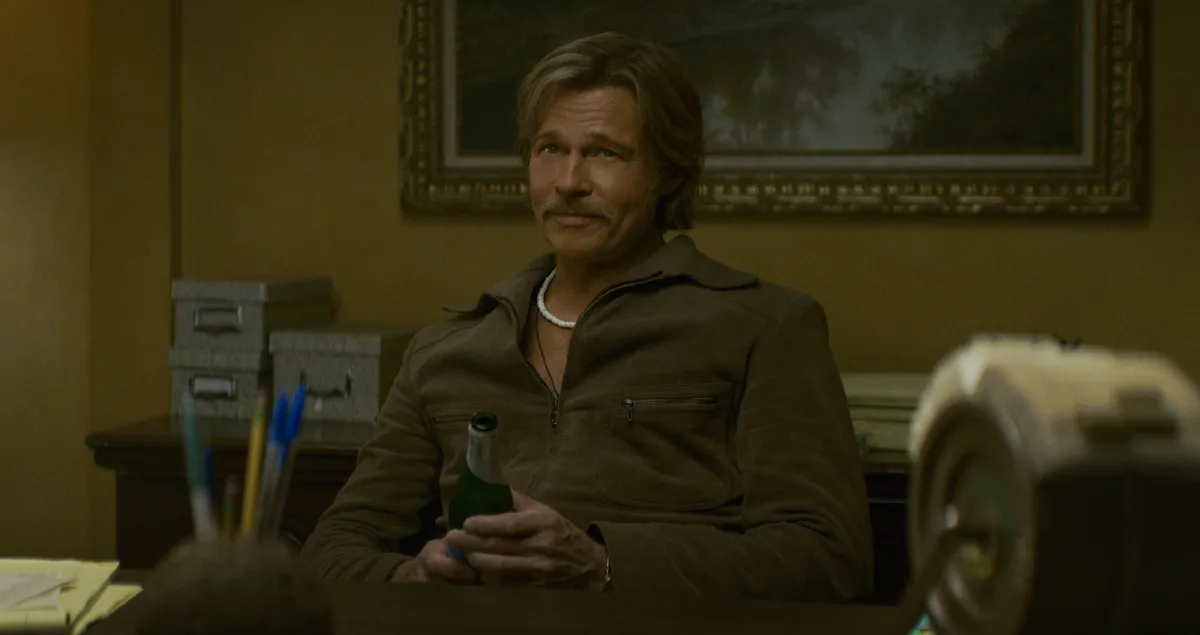
The film is described as a sequel to Once Upon a Time in Hollywood, starring Brad Pitt as Cliff Booth. Its full title is The Further Mis-Adventures of Cliff Booth. The supplied report says viewers found some visuals “uncanny” and “inconsistent,” and that those impressions clashed with expectations of a polished film from Fincher, whose work includes Fight Club and The Social Network.
Those descriptions tell us what some viewers thought they saw; they do not tell us what tools the filmmakers used. The available material does not specify which scenes prompted the claims, how many viewers made them, or whether the people posting had access to production information. It also contains no response from Fincher, Netflix, or the film’s production team. The difference between an allegation and confirmation should remain explicit while those gaps are unresolved.
What the evidence does—and doesn’t—show
Generative AI is one possible explanation for an image that looks strange, but the source provided offers no technical evidence tying the reported visuals to an AI system. It names no model, vendor, workflow, or production department. It supplies no before-and-after frames, credits, or documentation that would establish how any disputed shot was created.
That leaves a narrow, verifiable account: early viewers reported visual inconsistencies and speculated about AI. The excerpt does not confirm use, and it does not rule it out. Without a cited disclosure, identifiable evidence, or a response from the filmmakers, turning that speculation into a statement that the movie “uses AI” would go beyond the reporting.
The timing adds urgency but not proof. The claims surfaced after advance screenings and before the scheduled premiere, when audience discussion can spread quickly and public impressions may form before more information becomes available. The available source does not say whether the final version differs from the screened cut, whether filmmakers have addressed the claims, or whether the speculation has been independently verified.
Reactions and the questions ahead
The reaction described by The Verge is online criticism from viewers who considered the visuals uncharacteristic of the polished filmmaking they expected from Fincher. That is a response to perceived appearance, not a verified account of the production process. The supplied excerpt does not provide direct quotations from Fincher, Pitt, Netflix, or other members of the crew, so there is no confirmed industry response to report here.
For audiences, the practical takeaway is to separate three questions: Do particular images look inconsistent? Did the film use generative AI? And, if it did, what was the tool used for? The source supports only that viewers have raised the first question and speculated about the second. It provides no answer to the third. Those distinctions matter because AI-assisted work can refer to different kinds of tasks, while a visual impression alone cannot identify a tool or its role.
For filmmakers and distributors, the episode highlights a communication challenge without proving a production controversy: when audiences suspect AI, clear and specific information about a film’s process can help answer the question. Whether the team will provide such information is unknown from the source. Until there is evidence or an on-record response, the responsible description remains suspected use—not confirmed use.
Key Takeaways
- The Verge says viewers at early screenings speculated that the film used generative AI.
- Their reported concern was that some visuals looked uncanny or inconsistent.
- The supplied reporting does not confirm AI use or identify any AI tool or shot.
- No response from Fincher, Netflix, or the production team appears in the available excerpt.
- The film’s premiere is scheduled for November 25, according to the source.
Cited Reporting & Primary Sources
Published by TrendzNow Editorial Desk under our Editorial & Corrections Policy.
Report a correction
Reader Discussion (0)
Sign in with your TrendzNow reader account to post live comments.