Zelensky Calls Trump-Putin Friendship ‘Strange’ as Ukraine Seeks Stronger U.S. Pressure
In a BBC interview, Volodymyr Zelensky criticizes Donald Trump’s public warmth toward Vladimir Putin and says Washington is not pressing Moscow hard enough in peace talks. He also links delays in anti-ballistic missiles to Ukrainian lives.
TrendzNow Audio Narration
Watch the 60-Second Video Summary
Concise spoken briefing with synchronized captions and visual highlights on our official YouTube channel.
Across World, fresh developments around Zelensky Calls Trump-Putin Friendship ‘Strange’ as Ukraine Seeks Stronger U.S. Pressure are drawing close industry attention.
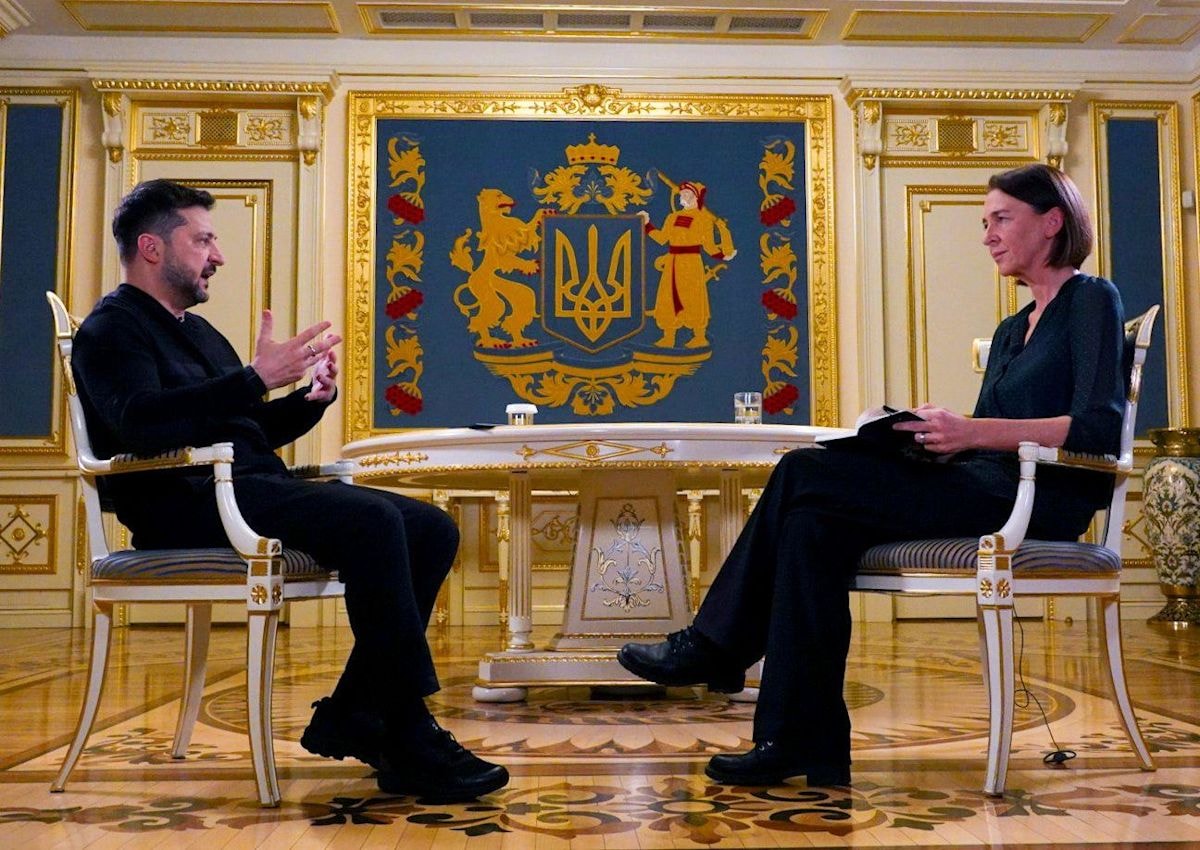
Volodymyr Zelensky has criticized Donald Trump for calling Vladimir Putin “my friend,” describing the relationship as “strange” in a BBC interview from Kyiv. The Ukrainian president’s remarks sharpen his public appeal for Washington to press Russia harder in negotiations, as he says delays in anti-ballistic missiles are costing Ukrainian lives.
The dispute is about more than a photograph or a personal description. Zelensky is challenging the signal that Trump’s language and public embrace of Putin send while Ukraine is seeking stronger U.S. leverage in talks to end the war.
What Zelensky said about Trump and Putin
Speaking in English to the BBC at his office in central Kyiv, Zelensky responded to Trump calling Putin “my friend” and posting a photograph of the two leaders embracing. “Of course it’s up to the president of the United States, but... it’s strange,” Zelensky said, according to the BBC and reports reproducing the interview.
He then rejected the description of Putin as a friend, calling the Russian leader “an aggressor, and a killer” and saying, “He can’t be a friend. Just cannot be.” Zelensky’s criticism was directed at Trump’s public characterization and the image of the leaders together; it was not a claim that the two governments had reached an agreement.
The Sun reported that the embrace occurred when Trump and Putin met in China earlier in November, ahead of talks involving Chinese leader Xi Jinping. The BBC account and other reports identify the photograph as a central prompt for Zelensky’s comments. The available reporting does not detail the substance or outcome of those talks, so the image alone cannot establish what was discussed or agreed.
The pressure points: negotiations and missile delays
Zelensky’s complaint connects Trump’s public posture to two practical concerns: how forcefully the United States is pressing Russia in peace talks, and the timing of anti-ballistic missile deliveries. The BBC reports that Zelensky believes Washington is not pushing Moscow hard enough to end the war. He also said delays in delivering vital anti-ballistic missiles were costing Ukrainian lives.
The sources provided do not identify the missile systems, the number delayed, a delivery schedule, or the specific incidents behind his statement. Nor do they establish that Trump personally ordered a delay. The distinction matters: Zelensky is describing the consequences Ukraine faces and criticizing the pace and pressure of U.S. policy, while the available reporting does not supply operational details to independently quantify the impact.
The BBC also reports Zelensky’s concern that the United States is too focused on the Middle East. In his account, that attention competes with the urgency of pushing Russia in negotiations. The interview therefore presents a wider policy complaint, not just an objection to Trump’s choice of words.
What the remarks mean for Washington and Kyiv
Zelensky’s comments put a public strain on the relationship between Ukraine and its most consequential negotiating partner in the reporting. His argument is that personal warmth toward Putin sits uneasily beside Russia’s role as the aggressor and the need for pressure to secure progress toward ending the war. Trump’s description of Putin as a friend is reported; the sources do not provide a response from Trump to Zelensky’s criticism.
The context remains a war in which Ukraine is seeking defensive support and diplomatic leverage. A separate Irish Times report says Russia is preparing draft laws to criminalize sharing information about Ukrainian strikes, including attacks on oil refineries and data centres. That report describes a distinct Russian policy development; it does not establish a direct connection to Zelensky’s BBC interview. It does, however, underline that the political argument is unfolding alongside ongoing military and information pressures.
For readers, the immediate questions are concrete: whether Washington will press Moscow more firmly, whether delayed missile deliveries will arrive, and whether public disagreement between the leaders affects Ukraine’s position in negotiations. The sources establish Zelensky’s concerns, but do not answer those questions or provide a new U.S. policy commitment.
Key Takeaways
- Zelensky called Trump’s description of Putin as “my friend” strange and rejected the idea that Putin can be a friend.
- He says the United States is not pushing Russia hard enough in peace talks and is too focused on the Middle East.
- Zelensky says delays in anti-ballistic missile deliveries are costing Ukrainian lives; the reporting gives no delivery dates or system numbers.
- The sources do not establish a response from Trump or a change in U.S. policy.
Cited Reporting & Primary Sources
- Yahoo News:Zelensky criticises 'strange' Trump-Putin friendship in BBC interview
- The Asian Age:Zelensky criticises 'strange' Trump-Putin friendship | The Asian Age Online, Bangladesh
- The US Sun:Zelensky slams Trump’s ‘strange’ friendship with Putin after Don shares snap – saying it’s ‘like being pals with HITLER’
- BBC News:Zelensky tells BBC US too focused on Middle East and not pushing Russia hard enough
- The Irish Times:Russia to criminalise sharing information about Ukrainian strikes
- Yahoo News:Zelensky: Being friends with Putin is like being friends with Hitler
Published by TrendzNow Editorial Desk under our Editorial & Corrections Policy.
Report a correction
Reader Discussion (0)
Sign in with your TrendzNow reader account to post live comments.